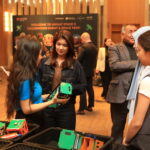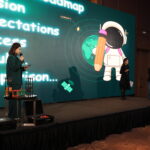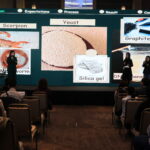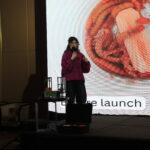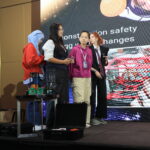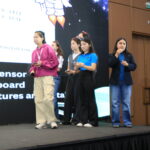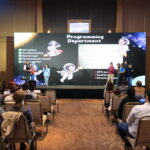






At Space Fest on November 3, the UniSat finalists presented two 3U CubeSat-format nanosatellites launched on October 4 in the village of Shege, Karakalpakstan, and shared the data obtained from the launch results.
🛰 For the first time among the three nanosatellite launches in previous UniSat seasons, one of the nanosatellites ascended into the stratosphere to an altitude of 27 kilometers.
The participants were divided into two teams, and each team conducted its own scientific experiment, the results of which were presented yesterday.
✳️ The Pixie team launched a nanosatellite carrying DNA samples (banana and kiwi), yeast cultures, mealworms, and several control materials (iodine, graphite, silica gel, etc.). Despite partial telemetry and sensor malfunctions, the experiment confirmed the resilience of DNA and yeast activity after the flight, while the mealworms did not survive—likely due to overheating. No pH changes or signs of radiation exposure were detected. The mission demonstrated that short-term biological changes in the stratosphere are minimal, but future launches will require improved thermal control and sensor redundancy to ensure reliability.
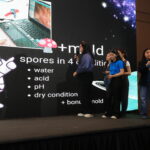
✳️ The Space Chicks team launched a nanosatellite into the stratosphere containing two quail eggs and biological samples—fungal spores treated with various substances and mold cultures in both dry and moist forms. One egg was placed in a 3D-printed lattice to test the structural strength, while the other was encased in foam material to study protein changes under low pressure, radiation, and extreme temperatures. After the flight, the first egg remained intact, confirming the reliability of the design, whereas the second showed visible texture and color changes in the protein, indicating denaturation. The mold samples successfully germinated, showing no significant differences between moist and dry cultures. The experiment demonstrated the resilience of biological systems to extreme stratospheric conditions (temperature fluctuations, radiation, mechanical stress) and highlighted the need to improve thermal insulation and monitoring of biological samples in future missions.